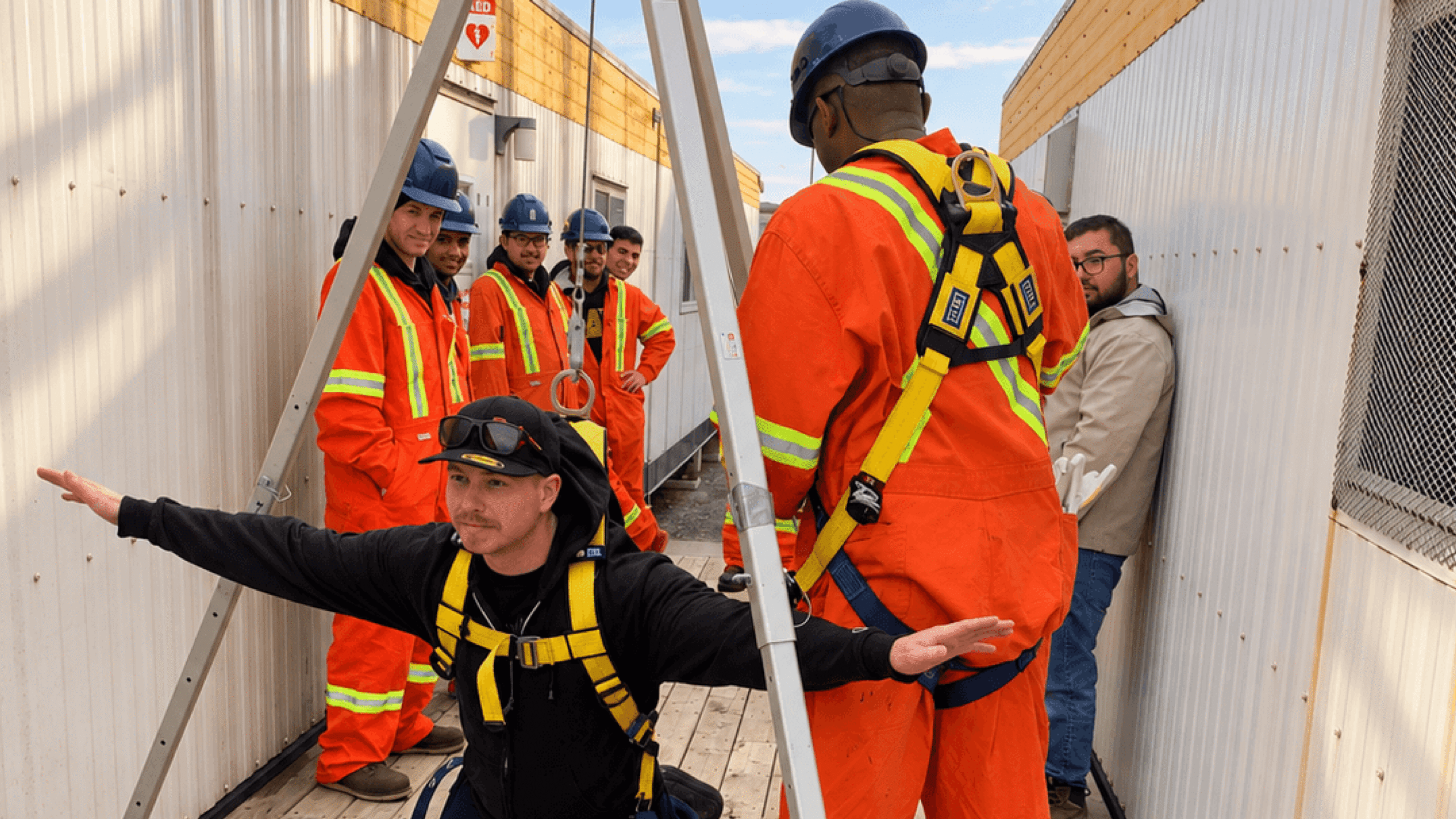
Completing required safety training is an important part of workplace health and safety.
It helps organizations meet applicable obligations, introduces workers to essential information, and establishes a foundation for performing work safely.
But completing a course and being prepared for the realities of a workplace are not always the same thing.
A worker may understand a procedure during training but encounter unfamiliar equipment, changing conditions, or challenges when applying that knowledge on the job.
This raises an important question for organizations:
How do we make sure training is useful after the course is finished?
The answer begins with understanding what people need to learn, why they need to learn it, and how that knowledge will be applied.
Compliance Is the Starting Point
Workplace health and safety training is not simply an administrative requirement.
Depending on the jurisdiction, industry, and work being performed, legislation may establish specific training, instruction, supervision, or competency requirements.
These requirements serve an important purpose and must be addressed.
However, an effective approach to training also considers the tasks workers perform, the hazards they may encounter, and the skills they need to carry out their responsibilities.
The Canadian Centre for Occupational Health and Safety (CCOHS) explains that workplace education and training should develop knowledge and skills to an acceptable standard, including instruction on safe work practices and procedures.
For employers, that means thinking beyond whether a course has been completed.
It means considering whether workers understand the material and have the preparation necessary to apply it.
Start With the Work Itself
A useful training program begins by examining the work people are expected to perform.
Consider two employees who both require health and safety training.
One works primarily in a controlled manufacturing environment. The other regularly moves between active construction projects.
They may share certain training requirements, but their working environments, equipment, and exposure to hazards can be very different.
Understanding those differences helps organizations identify the instruction and preparation most relevant to each role.
Before selecting training, employers should consider the activities being performed, applicable regulatory requirements, existing worker experience, and any workplace-specific hazards.
This doesn’t mean every course needs to be completely customized.
It means choosing appropriate training and identifying where additional instruction, practical experience, or supervision may be necessary.
Learning Should Connect to Real Situations
People need to understand more than the correct answer to a question.
They also need to recognize when and how that information applies.
For example, a worker may learn the principles of fall protection through a training course.
But applying that knowledge at a specific workplace may require understanding the equipment being used, the conditions of the work area, the applicable procedures, and the limitations of the available controls.
The course provides essential knowledge. Workplace-specific instruction and appropriate supervision help connect that knowledge to the task.
Depending on the subject, practical demonstrations, relevant examples, discussions, and opportunities to ask questions can make training more meaningful.
The objective is not simply to remember information, but to understand how to use it.
Different Training Formats Serve Different Needs
There is no single training format that works best for every situation.
Instructor-led courses can provide opportunities for discussion, questions, demonstrations, and practical learning activities.
Online training can offer flexibility, particularly for organizations managing different schedules, locations, or workforce requirements.
Workplace-specific instruction can address particular equipment, procedures, and operating conditions.
The most appropriate format depends on the learning objectives, the workers involved, and any requirements governing how training must be delivered or assessed.
For some topics, online instruction may be suitable. Other activities may require practical demonstration, hands-on assessment, or training delivered through an approved program.
Organizations should confirm these requirements before determining how training will be provided.
The important consideration is whether the training method is appropriate for what workers need to learn.
Course Completion Is Not the Same as Demonstrated Understanding
Training records provide useful evidence of participation and completion.
But they do not always tell an organization how confidently or correctly someone can apply what they have learned.
For activities involving practical skills, additional assessment may be necessary to determine whether workers can perform the task safely.
This could include observing a task, reviewing a procedure with the worker, asking questions, or assessing performance under appropriate conditions.
The goal is not to introduce unnecessary testing.
It is to identify whether important knowledge has been understood and whether additional instruction or supervision may be required.
CCOHS emphasizes assessing workers’ understanding following orientation and continuing education throughout employment as needed in its guidance on health and safety programs.
This provides an important reminder: learning does not necessarily end when a course does.
Keeping Training Relevant as Work Changes
Organizations change over time.
New equipment is introduced. Employees take on different responsibilities. Procedures are updated. Work moves into unfamiliar environments.
Training needs can change alongside those developments.
An employee who has performed a task for years may still require additional instruction when a new process or hazard is introduced.
Similarly, someone moving into a supervisory position may need knowledge and skills that were not part of their previous responsibilities.
Regularly reviewing training needs helps organizations identify where existing knowledge remains appropriate and where further development may be beneficial or required.
It also creates opportunities to address issues identified through workplace observations, worker feedback, inspections, or changes in operations.
Making Training Part of Everyday Work
A strong training approach doesn’t depend entirely on what happens in a classroom or during an online course.
Workers also benefit from clear instructions, access to relevant information, appropriate supervision, and opportunities to ask questions as they apply what they have learned.
Employers and supervisors have an important role in reinforcing expectations and identifying when additional guidance is needed.
Over time, this helps connect formal learning with the decisions people make during their regular activities.
The value of training becomes more apparent when it informs how tasks are planned, how hazards are recognized, and how workers respond to changing conditions.
Training With a Clear Purpose
Compliance requirements provide an essential foundation for workplace training.
Making that training effective requires an understanding of the people receiving it and the work they are preparing to perform.
The objective is straightforward: provide relevant knowledge, develop appropriate skills, and create opportunities to apply what has been learned.
HSE Elements offers instructor-led, online, and customized workplace health and safety training options for workers, supervisors, and organizations.
Explore HSE Elements’ Training options to find programs suited to your workforce and operational needs.